
The Story Behind Niu Lai — The Chinese Movie That Became a Viral Hit
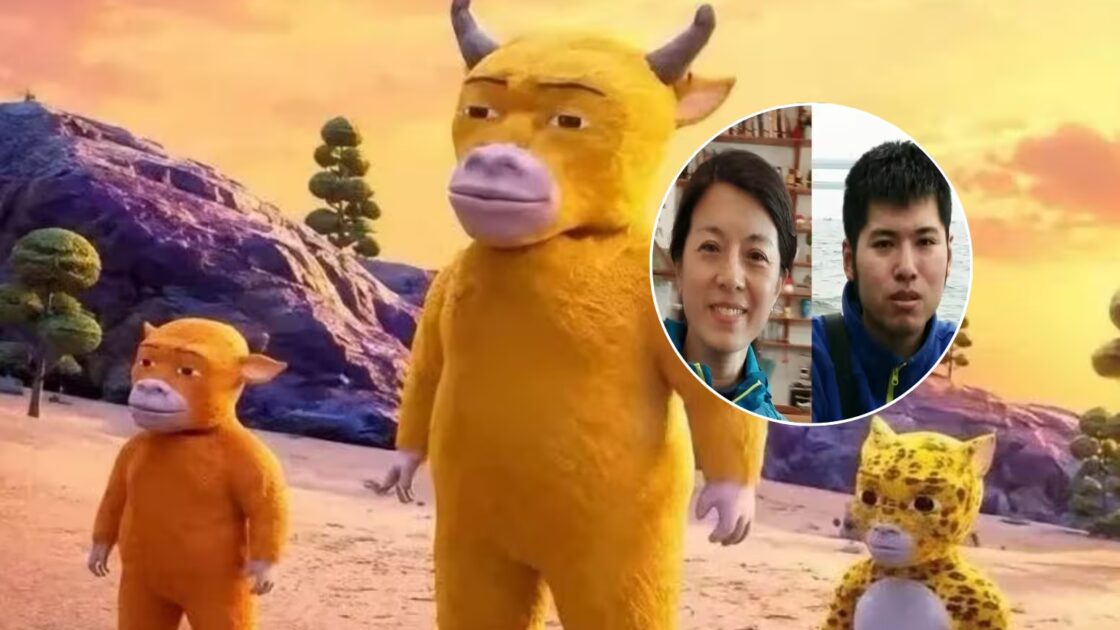
Every so often a film comes along that rewrites the rules of what “success” is supposed to look like. Niu Lai — roughly, Here Comes the Ox — is one of them. On paper it should never have worked. It is an 86-minute animated film about a timid calf, made by two people with no film training, on a single computer, over five years. Its opening ten days earned about 7,000 yuan — a little over US$1,000, from 236 tickets. By any industry measure, it was dead on arrival.
Then something happened that no marketing budget could have bought. The film went viral, screenings sold out, and Niu Lai has now grossed well over 15 million yuan — landing it among China’s top-grossing animated films of 2026, sharing multiplex screens with Spider-Man: Brand New Day.
But strip away the memes and the box-office fireworks, and what’s left is quieter and far more human: a story about a son who wanted to make a cartoon, and a mother in her sixties who taught herself an entire craft so he wouldn’t have to do it alone.
The dream started with a boy who loved cartoons
Xin Yumeng, 34, was not a filmmaker. He was an interior designer. What he did have was a childhood spent in love with animation and, in early 2021, an idea he couldn’t shake — a story about a newborn calf finding courage through a strange, dreamlike journey. He described it, modestly, as a passion project. He wasn’t chasing a hit. As he later put it, there was “no benchmark to determine whether the market will accept your work,” because nothing quite like it existed.
The family business had spent years in interior design and renovation before pivoting toward film and television in 2021 — right as Xin’s idea took hold. He would end up doing almost everything himself: the modelling, the animation, the editing, the production, and the voices. When the software threw errors he didn’t understand, he taught himself the fix from online tutorials, one problem at a time, for five years.
The mother who learned filmmaking from scratch
Here is the part that turns a curiosity into a story worth telling.
Xin’s mother, Sun Lifang, was in her sixties — an ordinary former state-enterprise employee with no background in film whatsoever. Rather than watch from the sidelines, she taught herself screenwriting to help build the story. She voiced multiple characters. She wrote the film’s theme song and sang it herself over the end credits.
A relative summed up what everyone around them could see: “From her spirit to her actions, she was supporting her son.” That’s the emotional engine of Niu Lai. Between them, mother and son wrote it, voiced every character, scored it, and animated it — a two-person studio powered by nothing more than stubbornness and love.
Why “rough” turned out to be the point
When Niu Lai reached audiences, the first reaction was mockery. The animation was stiff, the faces uncanny, the effects rudimentary. Critics reached for words like “disaster-level.”
And then the mood turned. In an era when audiences are increasingly suspicious of glossy, machine-generated content, the film’s visible imperfection started to read as something rare: proof of a human hand. Viewers began describing it as an antidote to “AI slop” — every rough edge a fingerprint. Chinese cinemas, working without any official press kit, drew their own promotional posters by hand, and one viral post captured the whole phenomenon perfectly: “not an AI in sight, just ppl living in the moment.”
View on Threads
People drove across cities to see it. Audiences reported laughing until they cried — and then, unexpectedly, being moved. The story of a small, frightened calf learning to be brave hit differently once people knew who made it, and how.
Will Niu Lai come to Malaysia?
For Malaysian fans wondering whether they’ll get to witness the phenomenon on the big screen: as of now, there’s interest but no confirmed date. Niu Lai has appeared on TGV Cinemas’ Malaysia website with its own dedicated page — a sign that a local distributor is at least eyeing a release. But the listing carries no rating, no runtime, and no showtimes, and TGV’s own page states plainly that there is no information yet on when it will arrive in Malaysia.
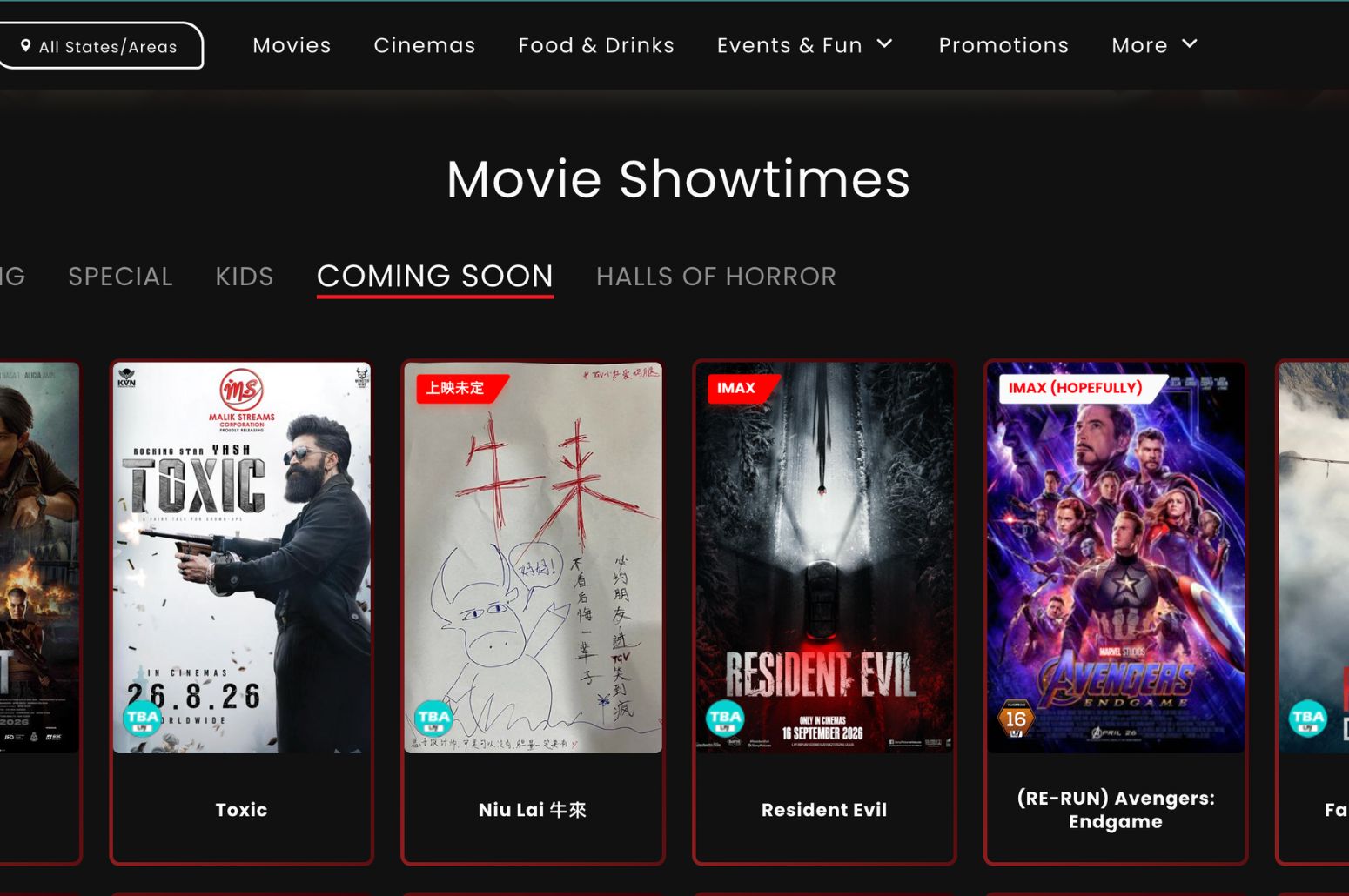
What we do know is that neighbouring Singapore has a confirmed release date of 1 September 2026. Regional rollouts often follow one another, so the Singapore launch could be the nudge that brings Niu Lai to Malaysian screens shortly after — but nothing has been officially announced. For now, the safest bet is to keep an eye on TGV and GSC’s “coming soon” listings, and we’ll update this piece the moment a Malaysian date is confirmed.
What creators can take from Niu Lai
It would be easy to file this under “so bad it’s good” and move on. That misses the real lesson.
Niu Lai succeeded because it was unmistakably, irreplaceably human — made by specific people, for reasons that had nothing to do with algorithms or trends. In a feed full of frictionless, optimised, machine-smoothed content, authenticity became the differentiator. The audience didn’t fall in love with the pixels. They fell in love with the two people behind them, and the five years those two people poured in.
For anyone building something of their own — a brand, a channel, a body of work — that’s the quietly radical takeaway. Polish can be bought and automated. Sincerity can’t. A mother and her son with one computer just reminded an entire country of the difference.
Niu Lai was released in China on 5 August 2026.