
Big Move: AirAsia Orders 150 Airbus A220s to Power Next Phase of Growth
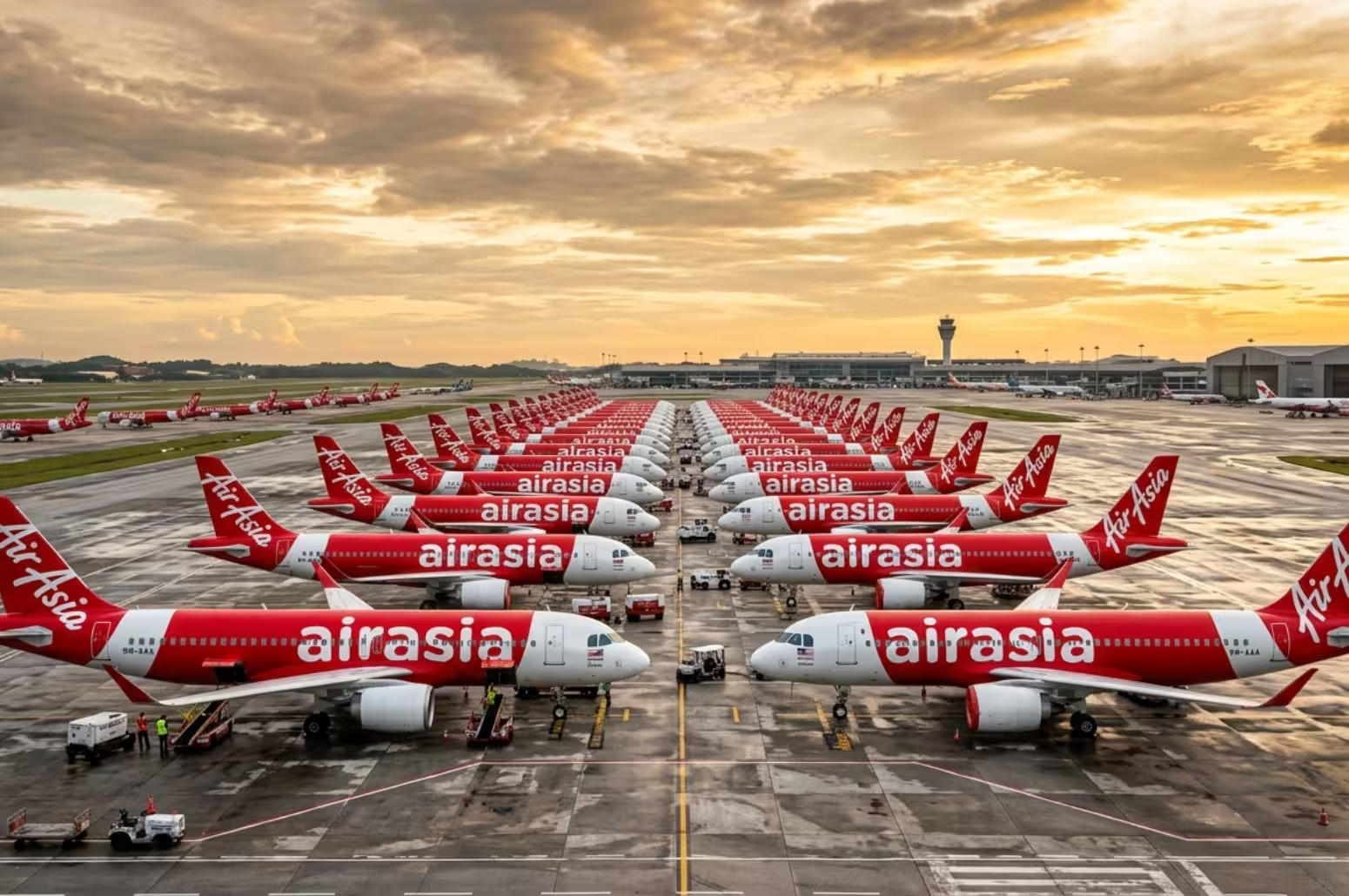
Malaysian low-cost carrier AirAsia has placed a landmark firm order for 150 Airbus A220 aircraft, marking the largest single order in the A220 program’s history and propelling total orders past the 1,000 milestone.
The deal, valued at approximately $19 billion at list prices, positions AirAsia for efficient regional expansion while modernizing its fleet with one of the most advanced narrowbody jets available. The announcement was made on May 6, 2026, at a high-profile ceremony at Airbus’s A220 facility in Mirabel, Quebec, Canada.
Historic Order Strengthens AirAsia’s Regional Dominance
AirAsia, part of the Capital A group, is making a bold strategic shift toward smaller, more efficient aircraft to complement its existing widebody and larger narrowbody fleet. The A220-300s will support denser short- to medium-haul routes across Southeast Asia and beyond, enabling the airline to serve secondary cities and high-frequency routes more profitably.
This marks AirAsia’s entry into the regional jet segment as a new Airbus customer for the type. Deliveries are expected to begin in 2028.
Key highlights of the order:
- 150 firm orders for the latest-generation A220-300.
- AirAsia becomes the launch customer for a new higher-density cabin configuration with 160 seats — an increase of 10 seats over standard layouts.
- Potential for additional growth: AirAsia has expressed strong interest in a stretched A220-500 variant (around 185 seats), with CEO Tony Fernandes publicly urging Airbus to proceed and committing to another 150 aircraft if launched.
Fernandes Plans to Start New Airline
Tan Sri Tony Fernandes, Group CEO of Capital A, revealed ambitions to launch a new airline that will leverage the incoming A220 fleet. The new carrier is expected to focus on premium economy and regional connectivity, targeting underserved markets in Southeast Asia and potentially expanding into longer regional routes.
Industry sources suggest the new airline could operate as a semi-independent subsidiary under the Capital A umbrella, using the highly efficient A220 to offer a step-up product from AirAsia’s core low-cost model while maintaining competitive fares. Fernandes envisions this as the next evolution in building a multi-brand aviation group, allowing AirAsia to protect its ultra-low-cost positioning while the new venture captures higher-yield traffic.
This move aligns with the massive A220 order, providing the right aircraft type for a fresh brand launch with modern, fuel-efficient jets from day one.
Why the A220 Fits AirAsia’s Vision
The Airbus A220 is renowned for its superior fuel efficiency, low operating costs, and excellent passenger comfort. Powered by Pratt & Whitney GTF engines, the aircraft delivers up to 25% lower fuel burn and reduced emissions compared to previous-generation jets.
For a budget carrier operating in a competitive, fuel-price-sensitive market like Southeast Asia, these efficiencies are game-changing.
Ceremony and International Significance

The signing ceremony in Mirabel was attended by key figures, including Canadian Prime Minister Mark Carney, underscoring the deal’s geopolitical and economic importance for Canada’s aerospace industry. The A220, originally developed by Bombardier as the CSeries, is assembled in Quebec and represents a major Canadian export success story.
Airbus Commercial Aircraft CEO Lars Wagner joined Fernandes at the event, celebrating the milestone for the A220 program, which has now surpassed 1,000 firm orders globally.
Broader Industry Context
This major commitment comes as AirAsia continues to recover and grow post-pandemic, with a large backlog of Airbus A321neo aircraft already on order. Adding the A220 creates a more versatile fleet mix: larger A321s for high-demand trunk routes and efficient A220s for thinner or regional markets.
The order also provides a significant boost to Airbus amid competition from Embraer’s E2 family in the regional jet space. It signals strong confidence in the A220’s capabilities for high-utilization, low-cost operations
What This Means for Passengers and the Region
Travelers can look forward to:
- More route options to smaller cities.
- Modern, comfortable cabins with better legroom and overhead space.
- Potentially lower fares enabled by reduced operating costs.
- Improved environmental performance per passenger.
For Southeast Asia’s aviation sector, the deal reinforces AirAsia’s leadership and supports broader economic connectivity, tourism, and business travel.
Looking Ahead
As AirAsia integrates these new aircraft, the airline will continue refining its network strategy. The potential A220-500 could further enhance its capabilities, offering even greater capacity on popular routes without sacrificing efficiency.
This landmark order cements AirAsia’s position as a forward-thinking, innovative low-cost carrier ready for the next decade of growth in one of the world’s fastest-growing aviation markets.
Other News
You might also like
 Post
ECRL Transit & Express Stations: Travel Time, Trains & Seat Classes
Table of Contents Transit vs Express: What Is the Difference? ECRL Express Stations ECRL Transit Stations Which Service…
 Post
Theme Parks to Visit in Malaysia 2026: 14 Picks + Prices
Table of Contents Quick Pick: Which Park Suits You? Theme Parks in KL and Selangor 1. Sunway Lagoon…
 Post
Merdeka 118 Finally Opens Its Doors on 1 November
Table of Contents 1. The Short Answer 2. Why Has It Taken So Long? 3. What Opens on…