
Jail for Mat Rempit: Tougher Road Laws Start 1 Nov
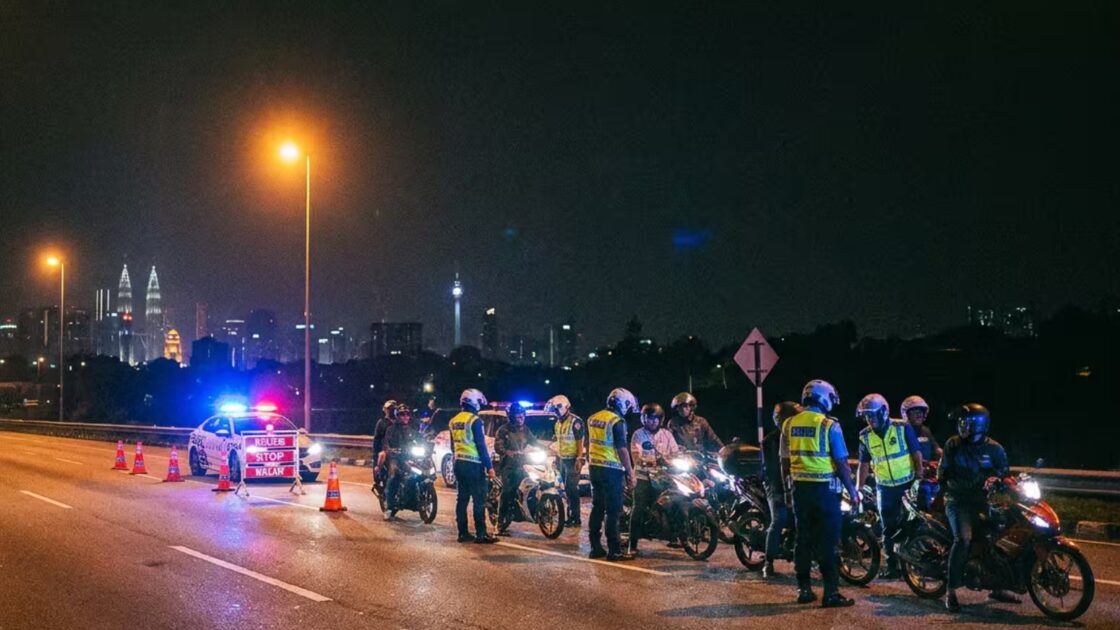
From 1 November 2026, Malaysia’s street racers — commonly known as mat rempit — are set to face much heavier penalties, including imprisonment, once amendments to the Road Transport Act 1987 (Act 333) come into force. The change treats illegal racing as an offence in its own right, rather than something authorities can pursue only after a crash.
The timetable was confirmed by Road Transport Department (JPJ) Senior Director of Enforcement Datuk Muhammad Kifli Ma Hassan. He said Parliament has already approved the amendments, and the remaining step is gazetting, after JPJ receives the views of the Attorney-General’s Chambers. “The amendments to Act 333 have been approved by Parliament and, if everything goes smoothly, they will come into force on 1 November,” he said. He added that far heavier penalties, including jail, would apply to mat rempit offences.
How the sentence will work
Jail is available. It is not automatic. The new Section 42A, inserted by Clause 15 of the Road Transport (Amendment) Bill 2026, creates two related offences: a race involving two or more motor vehicles on a public road, and a speed trial involving one or more motor vehicles. The same penalty band applies to both. The figures below are what a court may impose on conviction — they are not an on-the-spot compound.
- First conviction: a fine of not less than RM2,000 and not more than RM10,000, imprisonment of up to two years, or both
- Second or subsequent conviction: a fine of not less than RM5,000 and not more than RM20,000, imprisonment for a term not exceeding five years, or both
Read that structure carefully. The fine has a floor and a ceiling, so a convicted racer cannot be fined below RM2,000 on a first offence, or below RM5,000 on a repeat offence. Prison has a ceiling — “not exceeding” two years, then five — and no mandatory minimum for the racing offence itself. The words “or both” mean the court may impose a fine only, a jail term only, or a fine and jail together. A first offender could leave court with a RM2,000 fine and no jail. A repeat offender could receive RM20,000 and five years. Where a case lands inside that band is for the court, not for JPJ, to decide.
The offence is classified as seizable, or arrestable. Enforcement officers can arrest a suspect without a warrant, then bring the case to court. That is a different track from ordinary speeding, which is usually settled by compound. Transport Minister Anthony Loke has said the section is aimed at competitive racing and speed challenges, not a normal overtake or an isolated speeding offence. His example in the Dewan Rakyat was two or more motorcyclists racing or testing speed against each other on a public road: action can be taken even if nobody crashes. The same applies to a driver using a public road to test how fast a car will go.
Section 42A is also not limited to motorcycles. Loke said it covers any motor vehicle in an illegal race, including ordinary cars, luxury cars and high-performance cars. A separate, lighter provision covers micromobility vehicles such as e-scooters, with a fine of up to RM1,000 on conviction.
What the old law required
Until now, illegal racing was generally charged as dangerous driving. That required proof of an accident or of actual danger, so a meet that broke up before a crash was hard to prosecute. Section 42A closes that gap: the act of racing or speed-testing is itself the offence. Muhammad Kifli has also said the amendments will make it easier for investigating officers to act under Section 42(a) against people who endanger other road users. That is a separate existing provision from the new Section 42A.
Lookouts face a heavier band
A new Section 110B targets tontos — lookouts who tip racers off about enforcement. It covers obstructing, tailing, interfering with, or leaking operational information about JPJ or police operations, and is meant to protect officers as well as to break up the warning network. Reported penalties under the Bill are a fine of RM10,000 to RM50,000, imprisonment of one to five years, or both. That jail band has a floor, unlike the racing offence. The offence is also seizable. Loke said calls to keep heavily modified race vehicles from being returned to their owners had been noted, but any forfeiture would still have to follow due process. Seizure is not an automatic extra sentence under Section 42A.
Why the government moved now
In tabling the amendments, Loke pointed to the 2025 road-death toll: 6,537 fatalities, of which motorcycle users accounted for 4,340 deaths, or 66.4%. Motorcycles were involved in only 13.7% of all road accidents that year, and riders aged 16 to 30 were the highest-risk group. Muhammad Kifli described mat rempit activity as a national problem that needs continuous enforcement, not occasional sweeps. He singled out a recurring hotspot around Sultan Ismail Petra Airport in Kota Bharu, where JPJ will work more closely with the police.
The wider amendment
The Road Transport (Amendment) Bill 2026 was passed by the Dewan Rakyat on 24 June 2026 by voice vote, after debate by 43 government and opposition MPs. It introduces 41 amendments to Act 333, across 11 scopes.
Other changes raise the minimum court fine for selected offences — including failure to display a registration number, driving without a valid licence, and speeding — from RM300 to RM500, and lift the maximum compound ceiling from RM300 to RM500. Loke said offenders will not automatically be issued a RM500 compound. The higher compound ceiling is not due until 1 January 2029. Those compound changes do not replace the Section 42A court penalties. The Bill also expands digitalisation of JPJ services, including electronic documents and notices, and recognition of digital driving licences and road tax through the MyJPJ app.
What is still open
For mat rempit, the practical shift is this: a race or speed trial can be charged before anyone is hurt, the suspect can be arrested without a warrant, and the court then has a defined band that includes jail. Enforcement still depends on gazetting. Muhammad Kifli framed 1 November with the condition that “everything goes smoothly.” Until that notice is published, the date is the target, not a guarantee. Sentencing practice — how often courts use the jail option rather than the fine — will only become clear after the first convictions.
You might also like
 Post
ECRL Transit & Express Stations: Travel Time, Trains & Seat Classes
Table of Contents Transit vs Express: What Is the Difference? ECRL Express Stations ECRL Transit Stations Which Service…
 Post
Theme Parks to Visit in Malaysia 2026: 14 Picks + Prices
Table of Contents Quick Pick: Which Park Suits You? Theme Parks in KL and Selangor 1. Sunway Lagoon…
 Post
Merdeka 118 Finally Opens Its Doors on 1 November
Table of Contents 1. The Short Answer 2. Why Has It Taken So Long? 3. What Opens on…