
TuJu App vs Waze: Differences, Pros and Cons
For years, Malaysian drivers have basically had two choices for getting around: Waze or Google Maps. Then, in November 2025, the Malaysian Highway Authority (LLM) threw a third option into the mix.
Meet TuJu, a highway navigation app built by the same agency that runs the country’s expressways. It does a few things Waze simply doesn’t. And in October 2026, the government went a step further and started encouraging the public to use it in place of Waze, citing security concerns.
In this article, we cover:
- What TuJu actually is
- How it stacks up against Waze
- Which app suits which kind of trip
- Why the government is pushing it
What Is TuJu?
TuJu Highway Navigation is a joint effort between LLM and Prosignal Consortium Sdn Bhd. It launched in November 2025 to help motorists plan their journeys more efficiently and safely.
- In development since: 2022
- The name: Said to combine “two”, for two-way information between LLM and users, with “julat”, meaning distance
- Price: Free
- Where to get it: Google Play and the Apple App Store
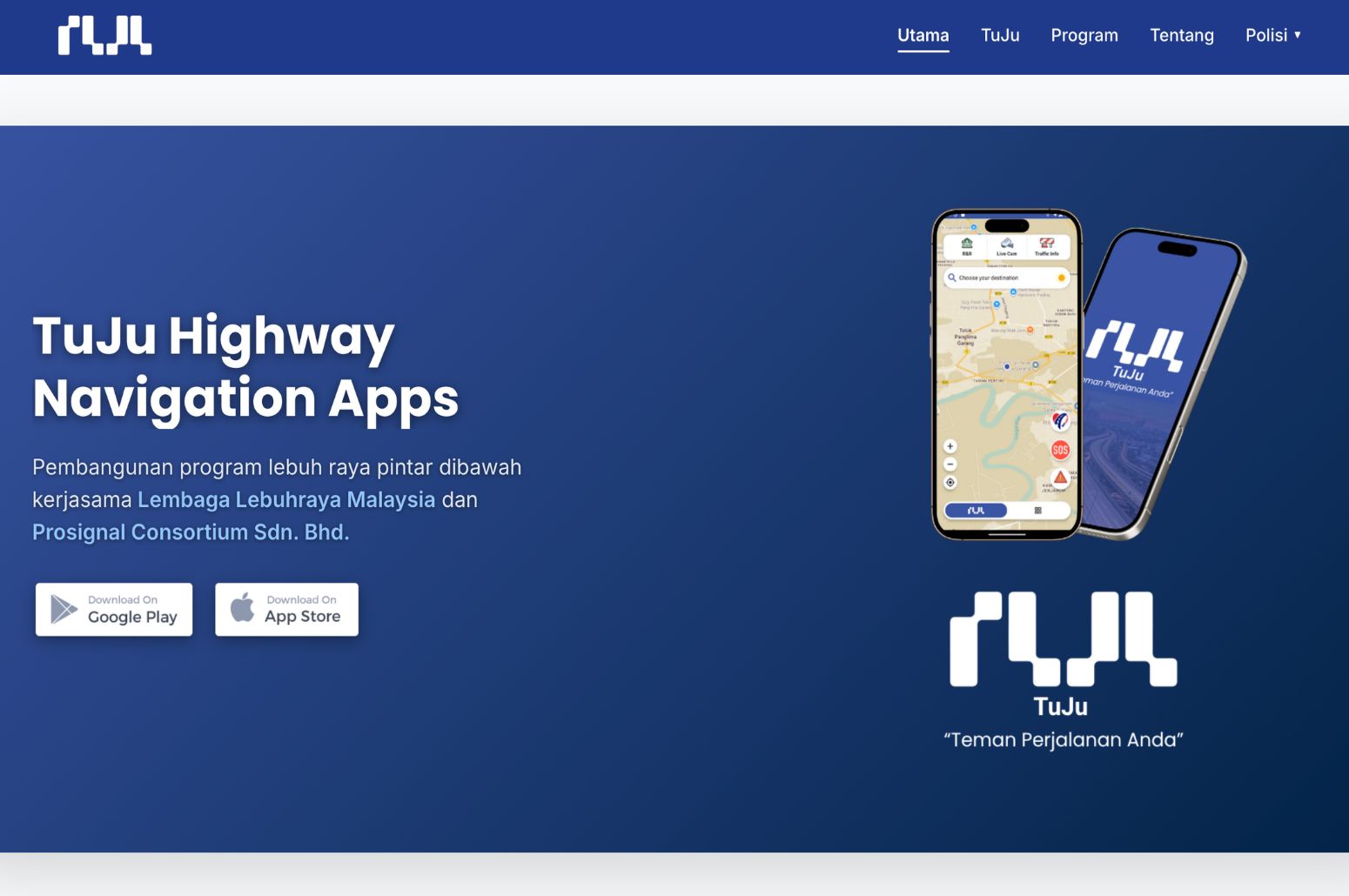
Its App Store listing describes it as a joint venture between LLM and Prosignal Consortium Sdn Bhd, built specifically for highway and expressway travel.
How TuJu and Waze Differ
Where the Data Comes From
This is the big one.
- Waze runs on crowd-sourced data. Its users report real-time traffic, accidents, road closures and other hazards.
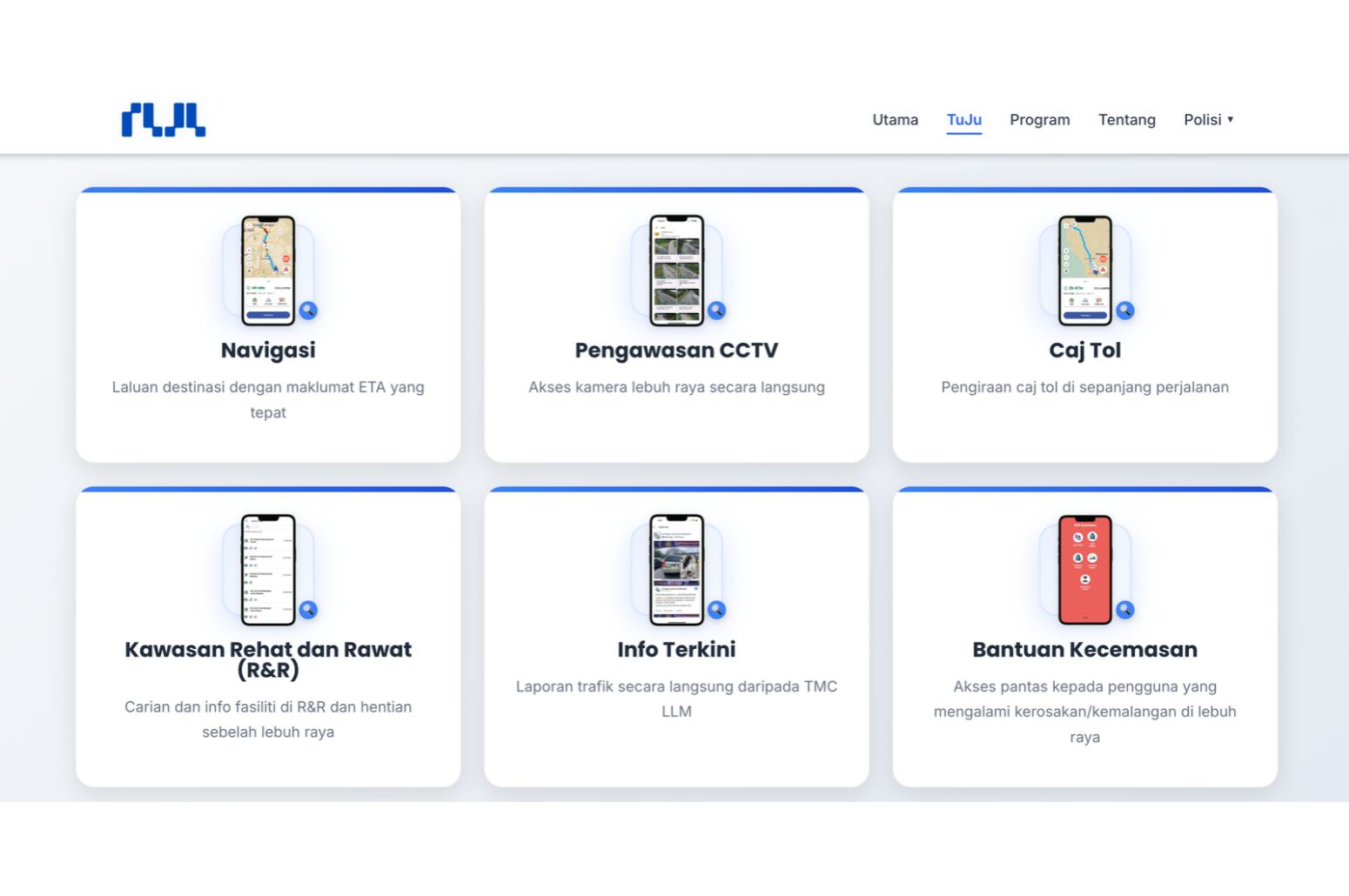
- TuJu runs on official data. It pulls live toll charges, traffic conditions and CCTV feeds straight from LLM’s traffic centre. Drivers can still report accidents or road closures in the app.
The catch? TuJu’s camera network is a lot smaller, with just 33 CCTV cameras owned by LLM. Coverage is narrower than Waze’s, but the footage comes directly from the authority that actually runs the roads.
Scope
- Waze covers the whole road network, but it’s built for private vehicles only, meaning cars and motorbikes. There are no bus routes or bike paths.
- TuJu sticks to highways and expressways, with toll info, rest stop details and emergency assistance as its core features.
Rest Stops and Facilities
Planning a pit stop? TuJu lists R&R areas and what’s available at each one. According to Paultan’s Malay-language report, the app shows a full list of R&R locations along with:
- Toilets
- Prayer rooms
- Restaurants
- Petrol stations
- EV chargers
Reporting and Enforcement
Waze’s crowd reporting has ruffled some feathers in Malaysia. Kuala Lumpur police have advised the public not to share police presence and roadblock locations on Waze, saying it hampers enforcement against drunk drivers and other offenders.
Not everyone agrees, though. Some argue that showing police presence actually makes drivers more careful. The debate is still ongoing.
Integration With Government Services
TuJu is integrated with the MyJalan app, so you can share information and file complaints directly from TuJu without switching apps.
Missing Features
TuJu isn’t as polished as Waze yet. Most notably, it doesn’t work with Apple CarPlay or Android Auto for now. The good news is that an LLM official said updates to support both are planned.
What Users Are Saying: “It Just Tells You to Go Straight”
Real-world feedback hasn’t been all smooth sailing. Users have shared screenshots of TuJu’s turn-by-turn navigation, and the complaint is pretty simple: the app just tells you to go straight.
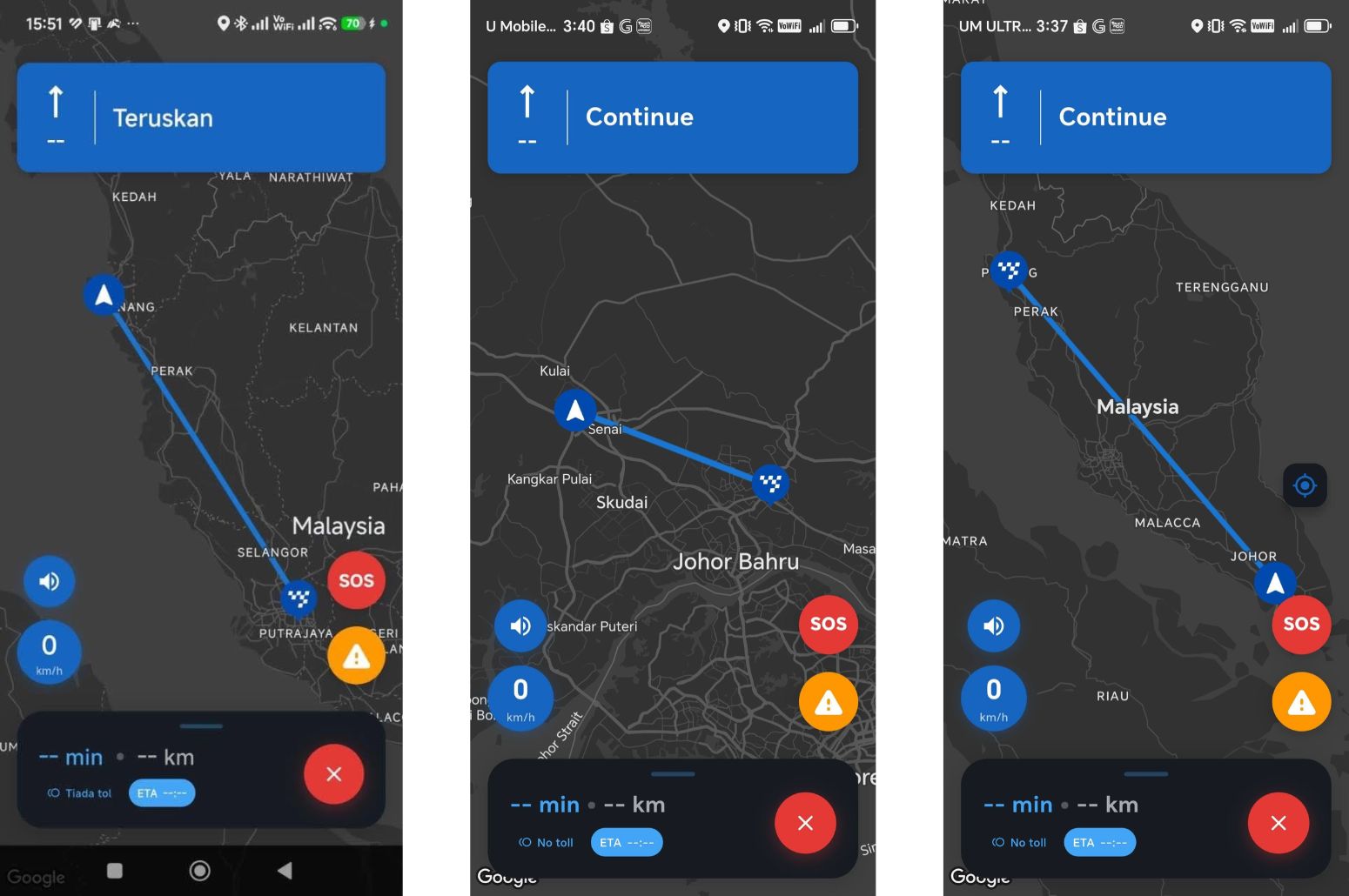
According to these reports:
- Only “Teruskan” or “Continue” prompts appear on screen, whether it’s a long-distance highway trip or a short drive around Johor Bahru
- No turn signals to warn you about upcoming exits or junctions
- No merge lane guidance for interchanges or lane changes
That’s a big deal on Malaysian highways, where missing an exit can mean a long detour to the next U-turn or interchange. Until this improves, you’ll probably want Waze or Google Maps running for actual directions, with TuJu handling tolls, CCTV and R&R info.
Note: these are user reports, not an official test, so your experience may vary depending on your route and app version.
Privacy
The App Store listing notes that the app may use location data even when it isn’t open, which can drain your battery faster. As with any navigation app, check the permissions before you install it.
So, Which One Is Better? Waze Wins (For Now)
Let’s not beat around the bush: Waze is the better navigation app right now. TuJu has some genuinely useful highway extras, but when it comes to the main job of getting you from A to B, Waze is simply ahead.
Here’s why Waze takes the win:
- It actually guides you. User reports show TuJu only telling drivers to “Continue”, with no turn signals or merge lane guidance. For a navigation app, that’s a dealbreaker.
- It covers every road. Waze works across the whole road network, while TuJu sticks to highways and expressways.
- Its traffic data is bigger. Waze’s huge crowd-sourced user base is its biggest strength. TuJu leans on just 33 LLM-owned CCTV cameras plus user reports.
- It works in your car. Waze is a staple on in-car screens, while TuJu doesn’t support Apple CarPlay or Android Auto yet.
That said, TuJu still has its uses as a sidekick on long highway trips:
- Checking toll charges before you leave
- Peeking at live CCTV from LLM’s traffic centre
- Finding R&R facilities like toilets, prayer rooms and EV chargers
- Quick access to emergency assistance
Our take:
- Daily city commute? Waze, no contest.
- Long highway journey? Waze for navigation. Open TuJu before you set off if you want to check tolls, CCTV or rest stops.
One thing to keep in mind: there are no independent tests comparing the two on accuracy or estimated arrival times. And if LLM fixes TuJu’s turn-by-turn guidance and adds CarPlay and Android Auto support, this race could get a lot closer.
The Government’s Push: From Congestion to Security
The government’s public case for TuJu has shifted over time, moving through three stages.
Stage 1: Launch and Safety (November 2025)
At the launch, Works Minister Datuk Seri Alexander Nanta Linggi said TuJu was developed to:
- Simplify travel planning
- Act as a rapid emergency assistance platform
- Improve the operational efficiency of highway concessionaires
Stage 2: Holiday Congestion (March 2026)
Ahead of Aidilfitri, Deputy Works Minister Datuk Seri Dr Ahmad Maslan encouraged highway users to try TuJu as an alternative to avoid congestion. He said the app lets users plan when to leave home and arrange their travel around that.
Stage 3: Security (October 2026)
On 20 October 2026, the government encouraged the public to use TuJu as an alternative to Waze for road navigation.
According to Bernama’s report in The Star, Prime Minister Datuk Seri Anwar Ibrahim said the alternative was proposed because of security risks around information on citizens’ movements, given that Waze is subject to Israeli law.
He made the remarks in a Facebook post after chairing the third meeting of the National Cyber Security Committee, which also discussed:
- The Cyber Security Act 2024
- MyDigital ID
- Post-quantum cryptography
A few things worth noting:
- The report did not cite a specific data incident involving Waze.
- Anwar’s direct quotes in the Facebook post focus on protecting citizens’ data and identities in general, and describe an integrated identity system built around MyKad and MyDigital ID.
- The Waze claim appears in The Star’s account, so it’s attributed to that report.
Why the Israel Angle Matters
Here’s the background. Waze was developed in Israel, and Google bought it in 2013 for nearly US$1 billion. That part is a matter of public record.
Whether Israeli law governs Waze’s data today is a different question. It depends on the company’s corporate structure and privacy terms, and this article doesn’t try to settle it.
We’ve Been Here Before
This isn’t the first time the argument has come up in Malaysia. Back in 2015:
- An Umno MP told Parliament that using Google Maps and Waze could threaten national security by giving foreign countries information about Malaysia.
- The deputy home minister at the time downplayed it, saying the apps helped people more than they helped terrorists.
- The government also said the apps’ data came from users who could opt out, and that the country couldn’t shun technology over such fears.
What’s Happening in the Region
In October 2026, Iraq announced it would ban Waze from the start of 2027, citing the company’s ties to Israel. Its communications minister said alternatives include Google Maps and Iraqi navigation apps.
Iraq’s case is separate from Malaysia’s, but it shows that governments in the region are now treating navigation apps as a policy issue.
How Malaysians Are Reacting
Reactions have been mixed:
- The skeptics: Some commenters on tech forums asked whether a new app was even needed, given that Google Maps and Waze already exist, and questioned how much it cost to build.
- The supporters: Others said TuJu could be useful in rural areas where commercial maps are weaker.
Keep in mind these are individual opinions, not evidence.
What the Security Argument Does and Doesn’t Show
At its core, the security case rests on one principle: citizens’ movement data should be protected and kept under local control. That’s a reasonable principle, and the government has tied it to a wider push for digital sovereignty.
What the public record doesn’t show yet is a specific incident where Waze data about Malaysians was misused. So when you’re making up your mind, weigh these three things together:
- The principle of protecting citizens’ data
- The claim that Waze is subject to Israeli law
- The absence of any cited incident
For what it’s worth, Malaysia’s 2015 debate ended at a similar standstill.
The Verdict
Waze is the winner. It covers every road, has a far bigger pool of live traffic data, works with in-car screens and, most importantly, actually tells you where to turn. For everyday navigation, it’s still the app to beat.
TuJu is a handy highway companion, not a replacement, at least not yet. Its toll info, R&R listings, official CCTV and emergency access are genuinely useful for trip planning, but its navigation needs work before it can take on Waze.
The government now encourages TuJu over Waze for security reasons, but nobody is required to switch. Our recommendation:
- Waze as your main navigation app, for both city and highway driving
- TuJu as an optional extra for checking tolls, CCTV and rest stops before a long highway trip
You might also like
 Post
ECRL Transit & Express Stations: Travel Time, Trains & Seat Classes
Table of Contents Transit vs Express: What Is the Difference? ECRL Express Stations ECRL Transit Stations Which Service…
 Post
Theme Parks to Visit in Malaysia 2026: 14 Picks + Prices
Table of Contents Quick Pick: Which Park Suits You? Theme Parks in KL and Selangor 1. Sunway Lagoon…
 Post
Merdeka 118 Finally Opens Its Doors on 1 November
Table of Contents 1. The Short Answer 2. Why Has It Taken So Long? 3. What Opens on…